Tape Burn: The Real Reason Gen Z Won't Stop Making Things Look Broken
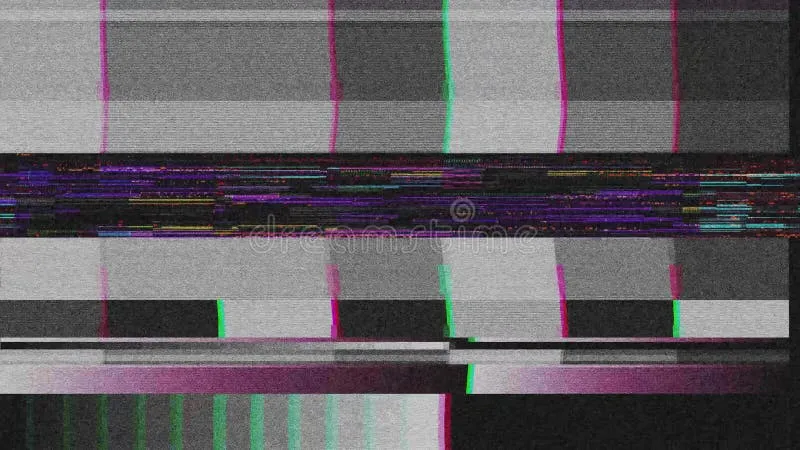
Photo: VHS tape glitch distortion static screen vintage video artifact, via thumbs.dreamstime.com
Open TikTok on any given afternoon and you'll find it: footage that looks like it was dubbed off a VHS tape in 1994, complete with chromatic aberration, scan lines, the slight warping at the top of the frame that meant your tracking was off. Except it was shot this morning on an iPhone 15. The degradation is the point. The brokenness is the design.
This isn't a niche thing anymore. Lo-fi, lo-res, deliberately corrupted aesthetics have moved from underground design communities into mainstream content creation, album artwork, brand identity packages, and fashion photography. The question worth asking isn't just what it looks like — it's why it looks like that now, and what it's actually saying.
What We Talk About When We Talk About VHS
First, let's get something out of the way: most Gen Z creators using VHS aesthetics were not alive for VHS. The youngest millennials barely remember it. This isn't nostalgia in the traditional sense — it's not longing for something you personally lost. It's something more like borrowed memory, or maybe inherited mythology.
The VHS era represents, in the cultural imagination, a specific kind of unpolished authenticity. Home videos from the '80s and '90s have a texture that feels real in a way that 4K HDR footage often doesn't. Part of that is genuine — those recordings captured life without the self-consciousness that comes from knowing everything you do might be optimized for an audience. The grain and the blur and the audio hiss are artifacts of a time before the performance of the self became infrastructure.
When a 20-year-old adds VHS effects to a video in 2024, they're not remembering that time. They're reaching for what it represents: evidence of a moment that existed for its own sake, not for the feed.
The Corruption as Critique
There's a more pointed edge to some of this, though, that gets lost when the conversation stays at the level of aesthetics.
The internet that Gen Z actually grew up on — the one they inherited, not the one they chose — is relentlessly, almost oppressively polished. Corporate social media looks like a luxury hotel lobby: everything smooth, everything optimized, every rough edge sanded down. The algorithmic feed serves content that has been performance-tested and engagement-scored and professionally lit. Even "authentic" content on Instagram is authentic within very specific, commercially legible parameters.
Against that backdrop, corruption and glitch aren't just aesthetically interesting — they're a kind of refusal. A corrupted file can't be sponsored. A VHS tracking error can't be A/B tested. The degraded image is, in a small but real way, outside the system that wants everything legible, monetizable, and clean.
Designers working in the experimental underground have been saying this explicitly for years. The glitch art movement — which has roots going back to early net art and has been theorized extensively by people like Rosa Menkman — has always understood digital error as a form of resistance. When a system fails visibly, it stops pretending to be neutral. The corruption is the truth.
From Underground to Algorithm (The Irony Is Not Lost)
Here's where it gets complicated, because it always gets complicated.
The same aesthetic that originated as a refusal of corporate internet culture has been enthusiastically absorbed by corporate internet culture. There are now Lightroom presets for VHS grain. Adobe sells glitch effect packs. Major brands — fast fashion companies, streaming services, even financial apps targeting younger users — have deployed corrupted-file aesthetics in their marketing. The rebellion became a mood board.
This is the cycle that swallows everything eventually, and it's worth being honest about it rather than pretending the underground is somehow immune. The question is whether the absorption kills the thing or just changes it.
Artists working seriously in this space tend to argue that the commodified version and the genuine article are distinct enough to coexist. A brand using a VHS filter on their product launch video is doing something categorically different from a designer actually corrupting files, working with broken hardware, building visual systems around failure and error. The surface similarity is there, but the intent — and the result — are different animals.
The Gear Matters More Than the Filter
Some of the most interesting work in this space is happening at the hardware level, which is where the aesthetic starts to feel less like a trend and more like a practice.
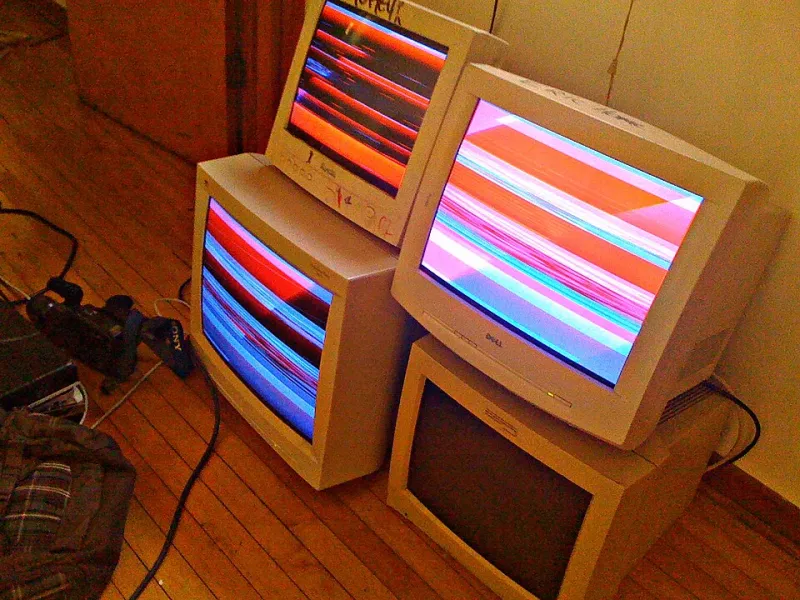
There's a whole community of artists and musicians working with actual degraded equipment — broken CRT monitors, tape decks with dying heads, early digital cameras with sensor damage, circuit-bent video mixers that produce unpredictable results. The outputs aren't simulated corruption. They're real corruption, which looks and feels subtly but unmistakably different.
That distinction matters to the people doing it. There's a craft element to working with genuinely broken systems that you don't get from dragging a slider in an app. The unpredictability is real. You don't fully control the output. That loss of control is, for a lot of these artists, the entire point — a direct inversion of the total-control, infinitely-revisable logic of professional digital production.
Some of the most visually striking album artwork and zine design coming out of underground scenes right now has this quality. It looks wrong in ways that feel specific and strange rather than generic. That specificity is what separates it from the brand version.
Genuine Rebellion or Just Another Aesthetic?
The honest answer is: both, depending on who's doing it and why.
For a lot of creators, the VHS filter is genuinely just a vibe — a way to make content feel warmer and less clinical, which is a legitimate creative choice that doesn't need to carry the weight of cultural critique. Not every aesthetic decision is a manifesto.
For others, the degradation aesthetic is part of a more considered practice around rejecting the visual language of optimized, corporate internet culture. Those creators tend to be doing more interesting work, and they're usually the ones you find in the spaces that don't have a lot of followers but have a lot of actual engagement — the small Discord servers, the Bandcamp pages, the hand-distributed zines, the corners of the internet that look like they were built by hand because they were.
The interesting question isn't whether the aesthetic is authentic or co-opted. It's whether the impulse behind it — the reach toward imperfection, toward things that exist outside the optimization machine — survives the cycle of absorption. History suggests it usually does, just in a different form, in a different corner, waiting to be found by whoever's looking hard enough.
The signal is still there. You just have to tune past the noise.