Quiet Signal: The Underground Creators Who Ditched the Algorithm and Built Something Better

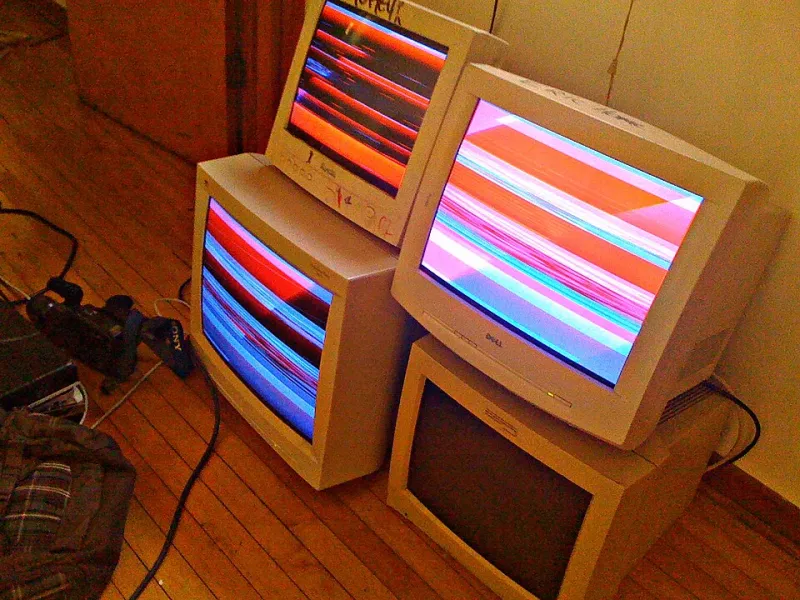
Photo: Wilfredor, CC0, via Wikimedia Commons
There's a specific kind of exhaustion that sets in after you've spent six months chasing a platform's moving goalposts. You optimize the thumbnail. You nail the hook in the first three seconds. You post at the exact right time on a Tuesday and watch the numbers flatline anyway. For a lot of creators in 2024, that exhaustion has curdled into something more deliberate — a quiet decision to stop playing the game entirely.
What's emerging on the other side of that decision is genuinely interesting. Call it the parallel audience economy, or just call it the underground. Either way, a loosely connected network of writers, artists, musicians, and weirdos is building out a completely different kind of infrastructure — one that trades raw reach for something most algorithms actively suppress: depth.
The Problem With Reach
It's worth being honest about what social media platforms actually sell. They don't sell audiences — they rent them. A creator with 200,000 Instagram followers doesn't own a relationship with those 200,000 people. They own access to a feed slot that the platform can reprice, restrict, or revoke at any time. The follower count is a vanity metric dressed up as an asset.
The creators who've figured this out tend to talk about it in the same terms: reach without relationship is just noise. And the platforms, almost by design, are optimized to produce exactly that — content that travels far but lands shallow.
So what does the alternative actually look like?
Newsletters as Load-Bearing Infrastructure
If there's one tool that shows up consistently in conversations with underground creators, it's the email newsletter. Not because it's glamorous — it isn't — but because it represents something the social platforms fundamentally can't offer: a direct line that the creator controls.
Substack gets most of the press, but the more interesting action is happening on tools like Ghost, Buttondown, and even self-hosted setups that give creators full ownership of their subscriber lists. The logic is simple: if a platform shuts down tomorrow, you still have the list. That's not a hypothetical — ask anyone who built their audience on Vine, or Tumblr pre-2018, or any number of platforms that quietly changed the rules mid-game.
What's notable about the newsletters that are actually working in underground creative spaces isn't their frequency or their production value. It's the tone. The ones with real traction read like letters, not content. They assume a reader who's already bought in, already curious, already willing to sit with something for more than eight seconds. That's a fundamentally different relationship than what the For You Page produces.
Discord as the New Basement Show
If newsletters are the backbone, Discord servers are the nervous system. And the way experimental creators are using them has almost nothing to do with how the platform gets covered in tech media.
The most vibrant creative Discord communities function less like fan clubs and more like old-school message boards or zine collectives — spaces where the creator is present but not central, where the community generates its own momentum and culture. Membership is often intentionally limited. Invite-only structures, application processes, even small paid tiers — all of these function as friction, and friction, in this context, is a feature.
One visual artist who runs a sub-500-member Discord for her experimental digital work put it plainly: "I could have 50,000 followers on Instagram who scroll past my stuff in half a second, or I can have 300 people who actually talk about it, argue about it, make things in response to it. The math isn't even close."
That trade — scale for density — is the defining logic of the parallel audience economy.
Patreon Tiers and the Architecture of Trust
Patreon has been around long enough that it's easy to overlook how structurally weird it is relative to the rest of the attention economy. It's a platform built on the premise that people will voluntarily pay for access to creative work they could often find for free elsewhere. And for the right creators, in the right communities, it works extraordinarily well.
The interesting design question is how creators structure their tiers. The most successful underground operators tend to avoid the trap of tiering by access to content — more money doesn't just mean more posts. Instead, they tier by proximity and participation. Lower tiers might get the work. Higher tiers get the process, the drafts, the Discord channel, the occasional live session where the creator is actually reachable.
What they're selling, ultimately, is the feeling of being inside something. That's a commodity that no algorithm can manufacture.
Alternative Platforms and the Long Tail of Weird
Beyond the big three tools, there's a longer tail of platforms that are quietly sustaining experimental creative communities. Are.na functions as a kind of visual research commons, beloved by designers and artists who find Pinterest's commercial energy alienating. Itch.io has become a genuine home for experimental game creators who have no interest in Steam's mainstream audience. Bandcamp, for all its recent turbulence, still represents something structurally different from Spotify's streaming economy.
What these platforms share is a design philosophy that tolerates — sometimes actively encourages — work that isn't optimized for mass consumption. They're built for the long tail, not the trending page.
Deliberate Obscurity as Creative Strategy
The most counterintuitive thing about the creators thriving in this space is that many of them are deliberately managing their own visibility. They're not failing to go viral — they're actively avoiding it.
The logic is partly about creative control. A community of 800 deeply engaged people is manageable in a way that a sudden influx of 80,000 casual followers isn't. Explosive growth tends to flatten community culture, attract bad-faith participants, and pressure creators to produce content that satisfies the new audience rather than the original one. Staying small is, in some contexts, a form of quality control.
But there's something else underneath it — a genuine skepticism about what virality actually produces. The creators building in these spaces tend to be making work that resists the optimization pressures of the main feed: slower, stranger, less immediately legible. The parallel audience economy isn't just a distribution strategy. It's a way of protecting the conditions that make the work possible in the first place.
What This Means for Everyone Else
None of this is to say the algorithm is dying. The attention economy is still enormous, still where most eyeballs live, still where most money flows. But the parallel infrastructure being built alongside it is more robust than it's ever been, and the communities forming within it are doing something the main feed rarely manages: they're actually holding people's attention.
For anyone making work that doesn't fit neatly into a trending format — which is to say, most genuinely interesting creative work — the tools are there. The audience is smaller, yes. But it's there, and it's paying attention.