Off the Grid: The DIY Networks Quietly Killing Algorithmic Music Discovery
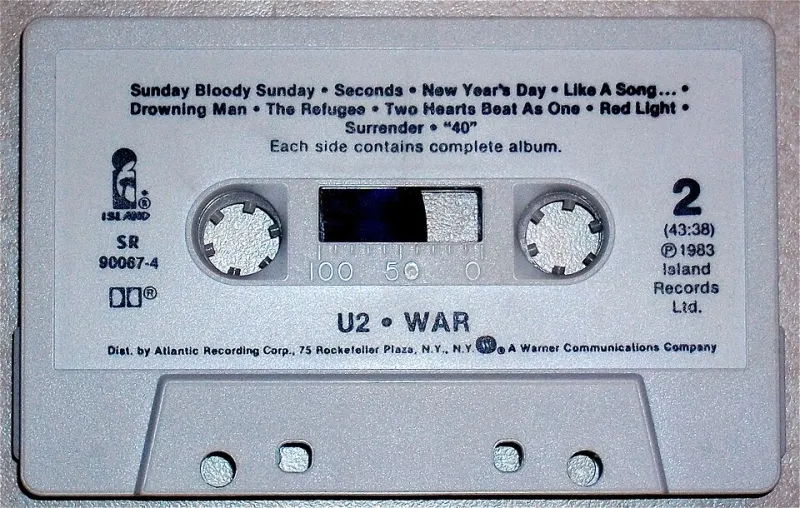
Photo: Patsobest, CC BY-SA 3.0, via Wikimedia Commons
The Feed Isn't Listening
There's a particular frustration that's hard to explain to someone who hasn't lived it. You spend months — sometimes years — crafting something genuinely weird, genuinely yours, and then you upload it to a platform that was designed, at its core, to surface the familiar. The algorithm isn't broken. It's working exactly as intended. It just wasn't built for you.
That realization has been quietly radicalizng a generation of independent musicians and their listeners. Not in a loud, manifesto-posting kind of way. More like a slow exhale followed by the question: what if we just... didn't?
What's emerged from that question is a sprawling, decentralized network of platforms, tools, and old-school community structures that look less like a tech startup and more like a record swap meet held in someone's basement. And honestly? That's kind of the point.
Bandcamp Was Just the Beginning
Most people who follow independent music know Bandcamp as the artist-friendly alternative to streaming. Direct sales, transparent revenue splits, Friday promotional events — it carved out real space for artists who wanted a relationship with their listeners that wasn't mediated by a recommendation carousel.
But for a lot of the communities operating on the fringes right now, Bandcamp is practically mainstream. The conversation has moved further out.
Platforms like Ampled — a co-op owned by its artists and workers — represent one direction: building the infrastructure itself differently, with collective ownership baked into the architecture. It's not just about where the money goes. It's about who gets to make decisions about how the platform evolves.
Other communities have gone even more lateral. Encrypted group chats, private RSS feeds, invite-only listening servers on Discord — these aren't just workarounds, they're philosophical statements about what music distribution should feel like. Scarcity and intimacy as features, not bugs.
The Cassette Underground Is Alive and It Has a Substack
Here's something that would have sounded absurd ten years ago: physical media is having a genuine cultural moment, and it's being driven in part by people who are extremely online.
Cassette labels — small operations running out of bedrooms in cities like Chicago, Richmond, and Portland — have seen a notable uptick in activity over the past few years. Labels like Orange Milk Records and Hausu Mountain have built devoted audiences not through algorithmic placement but through the kind of word-of-mouth that happens when something genuinely surprises you and you have to tell someone.
The interesting wrinkle is how these physical networks interface with digital ones. A tape label might have a mailing list of 800 people and a newsletter that reads more like a personal letter than a marketing email. The community around it lives in comment sections, on forums, in group chats. The music itself exists as an object you can hold, which creates a different relationship with it than a stream that disappears into your listening history.
Zine culture has reconnected with this ecosystem too. Physical publications covering experimental and underground music — distributed through record stores, venues, and mail order — serve as discovery mechanisms that no algorithm can replicate, because they're built on human editorial taste and genuine enthusiasm.
What "Decentralized" Actually Means in Practice
The word decentralized gets thrown around a lot, often in ways that are more aspirational than practical. But in the context of music distribution, it's taking on real, tangible forms.
Federated social platforms like Mastodon have become home to surprisingly active music communities — not because they're perfect, but because they operate outside the engagement-optimization logic that shapes behavior on corporate platforms. When there's no algorithm deciding what surfaces, curation becomes a genuine human act again.
Some artists have gone further, releasing music exclusively through peer-to-peer channels or self-hosted archives. The point isn't always accessibility — sometimes it's the opposite. Controlled scarcity, the idea that finding something should require a little effort, can actually increase how much listeners value what they find.
There are also collectives building tools specifically for underground music communities: custom-built radio platforms, collaborative playlist systems that require human curation rather than automated generation, and even geo-tagged discovery apps designed to surface local artists based on physical proximity rather than behavioral data.
The Philosophy Behind the Infrastructure
Talk to enough people building in this space and a consistent set of values starts to emerge. It's less about anti-corporate sentiment (though that's present) and more about a genuine belief that the relationship between artist and audience got broken somewhere along the way, and that fixing it requires rebuilding from different assumptions.
The dominant streaming model treats music as ambient content — something to fill silence while you do other things. Playlist placement and skip rates are the metrics that matter. In that framework, a challenging or difficult piece of music is just a liability.
The communities pushing back on this aren't necessarily making easier music. They're making the case that harder music deserves an audience too, and that finding that audience is worth doing the slow, weird, inefficient way if that's what it takes.
There's something that feels genuinely significant about that. In a media landscape where everything is optimized for frictionless consumption, choosing friction — choosing the thing that requires a little more from both the creator and the listener — is its own kind of statement.
Signal in the Noise
None of this is going to replace Spotify. That's not really the goal. The goal, as best as it can be articulated, is to maintain spaces where music that doesn't fit the algorithmic mold can still find its people — where the discovery process itself is part of the culture, not just a means to an end.
For listeners, that means being willing to follow a recommendation from a person you trust into genuinely unfamiliar territory. It means subscribing to newsletters, buying tapes, showing up to small shows in weird venues, and accepting that some of the best music you'll ever hear might never trend anywhere.
For artists, it means accepting that building an audience outside the algorithm is slower and less legible — you won't have a dashboard telling you your numbers are up. But the audience you build tends to be one that actually shows up.
The underground has always operated this way. What's different now is that the tools for doing it at scale — while keeping the intimacy intact — are genuinely better than they've ever been. The networks are there. You just have to know where to look.