Connected to Nothing: How the Feeds Designed to Bring Us Together Are Making Us Lonelier

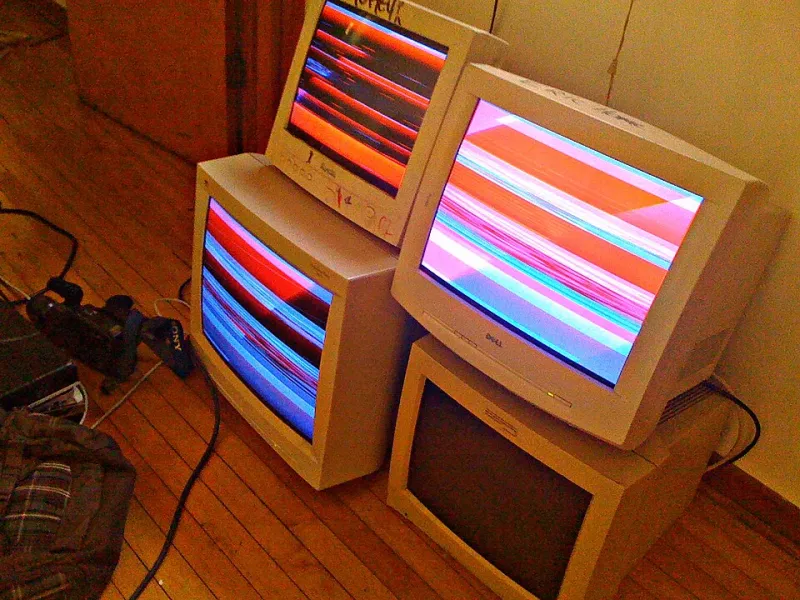
Photo: Magnus Lindvall dnmgns, CC0, via Wikimedia Commons
There's a specific kind of loneliness that hits you after an hour of scrolling. You've seen hundreds of faces, absorbed thousands of words, watched people laugh and cry and perform their lives for an audience. And somehow you feel further from other human beings than when you started. That's not a coincidence. That's a feature.
We're living through a strange contradiction. Americans are more digitally connected than at any point in history — Pew Research consistently finds that a majority of US adults are active on multiple social platforms — and yet the Surgeon General's office declared loneliness a public health epidemic just a couple of years ago. Those two facts aren't unrelated. The platforms that were supposed to wire us together have, in some fundamental way, wired us apart.
The Machine Doesn't Care If You Feel Seen
Here's the basic problem: engagement-maximizing algorithms and genuine human connection are pulling in opposite directions, and the algorithm always wins.
When a platform's core metric is time-on-app, the goal isn't to give you a satisfying interaction that sends you back into the world feeling good. The goal is to keep you reaching for the next thing. Contentment is the enemy of the scroll. So the feed learns, quickly and efficiently, that mild anxiety works better than warmth. Outrage works better than understanding. Aspiration works better than belonging.
Dr. Yalda Uhls, a researcher who studies digital media and adolescent psychology, has described this as a fundamental design mismatch. The platforms weren't necessarily built to make people lonely, but they were built to maximize a metric that has loneliness as a side effect. Nobody put that in the mission statement. It happened anyway.
What you end up with is something that looks like a social life but functions more like a one-way broadcast medium. You post. You wait for validation. You consume what the algorithm serves. The actual messy, reciprocal, uncomfortable work of connecting with another person — that part keeps getting optimized out.
Echo Chambers Are the Product, Not the Bug
The other piece of this is the filter bubble problem, which has been discussed so much it's almost become a cliché, but it's worth revisiting from a loneliness angle that doesn't get enough attention.
Algorithmic echo chambers don't just polarize people politically. They create a subtler kind of isolation: the sense that everyone around you already agrees with you, which sounds comforting until you realize it means you're never actually being challenged, surprised, or genuinely encountered by another person's real perspective.
Real relationships involve friction. They involve someone you care about saying something you didn't expect, or holding a view you find baffling, and having to work through that together. Algorithms sand all of that down. Your feed becomes a mirror, and mirrors can't actually keep you company.
Sociologist Sherry Turkle has spent years writing about what she calls being "alone together" — the phenomenon of people sitting in the same room, each absorbed in their own device-mediated reality. The algorithmic echo chamber takes that further. You can be alone together with millions of people, all of you in your own personalized bubble, none of you actually touching.
What the Underground Already Figured Out
Something interesting is happening on the margins, though. In the same way that the experimental corners of the internet have always found ways to route around the corporate infrastructure — small forums, invite-only Discord servers, deliberately obscure Telegram channels — a new wave of platforms is trying to build around connection rather than content.
Apps like Geneva, BeReal (before it got acquired and mainstreamed), and a handful of smaller experimental platforms are experimenting with feeds that don't optimize for pure engagement. Some remove likes entirely. Some limit the audience size algorithmically. Some are building in what designers call "friction" — small intentional obstacles that slow down consumption and force something more like actual interaction.
The results are genuinely interesting. Smaller, weirder, harder-to-use platforms tend to generate the kind of community that people describe as actually mattering to them. The same dynamic you see in underground music scenes or experimental art collectives: the difficulty of access becomes a filter that selects for people who actually give a damn.
This isn't a coincidence. When a platform doesn't hand you a perfectly curated feed of content designed to keep you swiping, you have to do something more effortful — reach out, start a conversation, find the weird corner of the internet where your specific obsessions live. That effort is, it turns out, kind of the point.
The Attention Economy Has a Loneliness Tax
There's a useful way to think about this borrowed from economics: externalities. When a factory pollutes a river, the cost of that pollution isn't paid by the factory — it's paid by everyone downstream. Engagement-maximizing social platforms work similarly. The cost of the loneliness they generate isn't paid by the platform. It's paid by users, by families, by the mental health system, by a society that's getting measurably worse at forming and maintaining the kinds of bonds that make communities function.
That's starting to get some political traction. Legislators in several states have pushed for transparency requirements around algorithmic systems, particularly as they affect minors. Whether any of that translates into meaningful structural change is genuinely unclear. The platforms are big, the lobbying is well-funded, and the regulatory frameworks are still catching up to the technology.
In the meantime, a lot of people are making the decision quietly, on their own. Deleting apps. Downgrading to older phones. Setting timers. Finding the small, unglamorous digital spaces that feel more like a neighborhood bar than a stadium concert — places where people actually know your name, or your username, which sometimes amounts to the same thing.
Signal, Not Noise
The loneliness algorithm isn't a conspiracy. There's no room at Meta or TikTok headquarters where executives cackle about making people feel isolated. It's something more mundane and in some ways more troubling: a set of optimization pressures that nobody fully designed, producing outcomes nobody fully intended, at a scale that's hard to comprehend.
But the fact that it wasn't designed doesn't mean it can't be resisted. The experimental corners of the internet have always known that the most interesting stuff happens off the main feed, in the spaces the algorithm hasn't colonized yet. Those spaces are still out there. They're just harder to find, which is, increasingly, the whole point.
You have to want it enough to look.