Selling the Scraps: How Experimental Creators Turned Their Rejects Into a Market
Somewhere between a Bandcamp page and a Discord server with fewer than 200 members, a musician is selling a folder of songs they never finished. Not a polished B-sides collection with liner notes and a PR push — just a zip file, a short explanation, and a price tag. And people are buying it.
This is the artifact economy. It doesn't have a formal name yet, and most of the people operating inside it would probably resist giving it one. But the pattern is real: experimental creators — musicians, visual artists, writers, coders, filmmakers — are monetizing their failures. The stuff that didn't work. The projects that got shelved. The drafts that never became anything. And niche communities are treating these objects like they're rare.
Because, in a way, they are.
The Reject as a Relic
There's a long history in mainstream culture of posthumous releases, vault excavations, and deluxe editions that pad out a legacy with leftover material. But that's usually done to a finished artist, after the fact, often without their input. What's happening now is different. Living creators are choosing to surface their dead ends while they're still in the middle of making things, and they're doing it deliberately.
A visual artist in Portland put it simply in a newsletter post that circulated through a few underground design communities earlier this year: "The finished piece is the lie I told everyone, including myself. The sketches are what actually happened."
That framing matters. In experimental and underground creative spaces, process has always carried more cultural weight than product. The how is the point. The finished object is almost a formality — a snapshot of one possible resolution to a problem the creator was actually more interested in living inside. So when these communities started assigning monetary value to the process artifacts — the failed iterations, the abandoned directions, the work that got killed before it could become work — it wasn't a weird leap. It was almost inevitable.
Scarcity Gets Weird
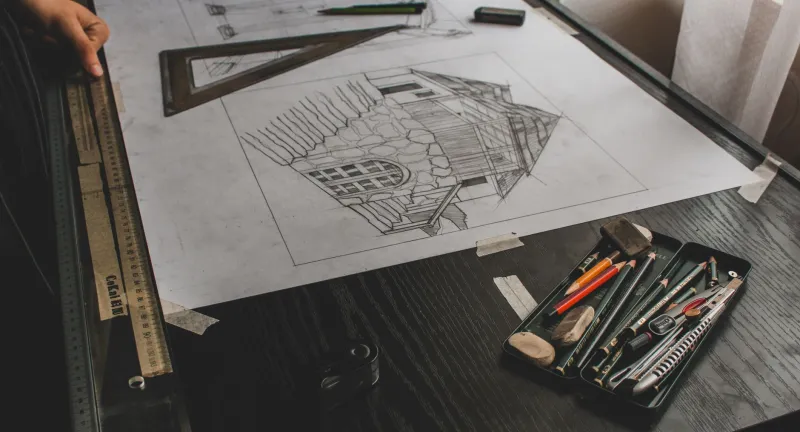
The mechanics of how this stuff gets sold vary pretty wildly. Some creators drop limited digital packages through platforms like Gumroad or Itch.io, pricing them low enough to feel accessible but capping quantities to create genuine scarcity. Others have moved into NFT territory, minting what they're openly calling "failure tokens" — single editions of rejected pieces with metadata that documents why the work was scrapped. A few have gone fully analog, printing small runs of zines that are literally assembled from crossed-out drafts and margin notes.
What's interesting is how the incompleteness itself functions as the value proposition. This isn't "here's extra content." It's closer to "here's the thing that didn't survive, and that's specifically why it matters." The rough edges aren't being smoothed over for palatability. They're being preserved as the point.
In collector culture, provenance has always been a big deal — knowing where something came from, what it went through, who touched it. The artifact economy is doing something similar but compressing the timeline. You're not buying history decades later. You're buying the raw material of a creative process while the person is still in it, still figuring things out, still making new failures to potentially sell next season.
Underground Validation Loops
For this to work, the community has to care. And in the spaces where this is actually gaining traction, they genuinely do. Underground creative communities — especially ones built around experimental music, net art, and DIY publishing — have long operated on a different value system than mainstream culture. Obscurity isn't a problem to be solved. It's a feature. The fact that something didn't reach a wide audience can actually increase its perceived significance within a tight-knit group.
When a creator surfaces a rejected project and says "this is the version that didn't make it," they're inviting the community into a kind of shared secret. The people who buy it aren't just purchasing a file or an object — they're purchasing proximity to a decision. They're holding the evidence of a road not taken. In communities that already fetishize process and authenticity, that's a genuinely powerful thing to offer.
It also creates a new kind of loyalty loop. The people who buy your failures are, almost by definition, your most invested audience. They're not there for the polished output. They're there for you — for the specific texture of how your mind works, including the parts that don't resolve cleanly. That's a deeper relationship than streaming numbers or follower counts can capture.
What Gets Lost (And What Doesn't)
There's a reasonable concern lurking underneath all of this. If failure becomes a product, does it stop being failure? Does the act of packaging and selling a dead-end retroactively give it a purpose it wasn't supposed to have, and does that change the creative ecosystem in some subtle, corrosive way?
Maybe. Some creators who've experimented with this model have noted that it changes how they approach their own process — not always for the better. When you know the rejects might have a second life, you start thinking about them differently while you're making them. The unselfconsciousness that makes raw process material interesting in the first place can start to curdle into performance.
But others argue the opposite: that knowing there's no true waste, that even the dead ends have potential value to someone, is actually liberating. It lowers the stakes of experimentation. It makes the weird swing feel less risky. If the failure has somewhere to go, you might be more willing to fail interestingly.
The Signal in the Noise
What the artifact economy ultimately reflects is something bigger about how underground culture has repositioned itself in the age of algorithmic content. When every finished, polished thing is competing for the same depleted attention, the unfinished thing stands out. Not because it's worse — but because it's different in kind. It exists outside the logic of optimization. It wasn't built to perform. It was built, and then it didn't work, and now it's here anyway.
That's a weird kind of freedom. And apparently, it's worth paying for.