The Anatomy of Obsession: What Picking Apart a Creator's Life Says About You
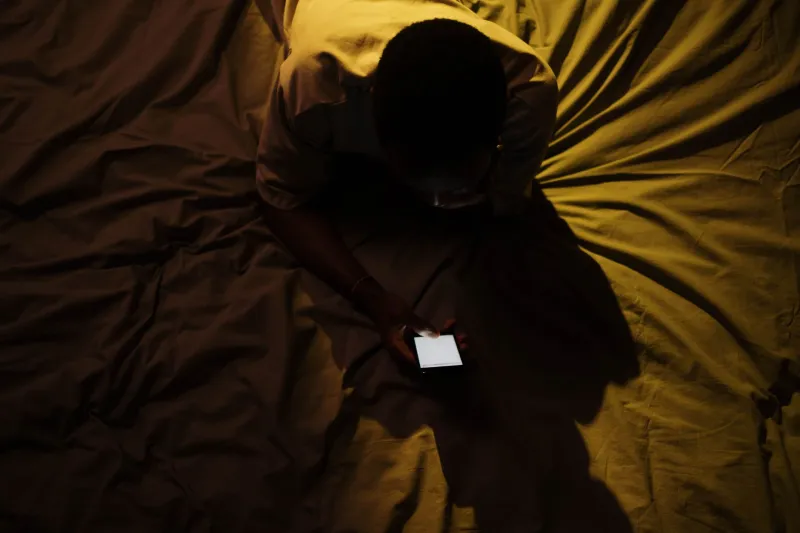
There's a moment — maybe you've had it — where you're forty-five minutes deep into a comment thread about whether a creator's recent Instagram caption was a cry for help or just bad copywriting. You didn't mean to end up here. You started by watching one video. Now you're cross-referencing old livestream timestamps with their Spotify activity and wondering why they unfollowed someone they used to tag every week.
This is not casual fandom. This is something else. And it's worth asking what, exactly.
The Intimacy Illusion
Creators sell closeness. That's not cynical — it's structural. The entire economy of content is built on the feeling that you know someone. The bedroom setup, the unfiltered rant, the "I've never told anyone this" confessional — all of it trains your brain to treat a stranger like a friend. Neuroscience backs this up. Parasocial relationships activate the same social processing regions as real ones. Your brain doesn't fully distinguish between a person you've met and a person you've watched for three hundred hours.
So when something shifts — a breakup hinted at through absence, a sponsor dropped without explanation, a comment liked then unliked at 2 a.m. — your nervous system registers it the way it would if someone you actually cared about went quiet. You investigate because it feels like something happened to someone you know.
Except you don't know them. You know a version of them that was designed, consciously or not, to feel knowable.
What the Autopsy Is Really For
Here's the uncomfortable part: the dissection of a creator's private life rarely turns up what we say we're looking for. We say we want the truth — the real story behind the vague posts, the actual reason for the hiatus, the name of the person they're clearly in love with. But the truth, when it surfaces, almost never satisfies. It just spawns more questions.
That's because the analysis isn't really about them.
When you spend hours cataloguing someone else's emotional state, you're doing a kind of displaced self-examination. Their pain is easier to look at than yours. Their relationships are easier to theorize about than the ones you're actively living. There's a reason fandom explodes around creators who are visibly struggling — not out of cruelty, but because their visible mess gives people a container for their own unresolved stuff. You're not diagnosing them. You're using them as a mirror.
Control in a World That Won't Hold Still
There's also something about certainty. Life is chaotic. Algorithms shift. Jobs disappear. Relationships don't make sense. But a creator's timeline? That's a finite data set. You can scroll to the beginning. You can find patterns. You can build a theory and defend it in a thread and feel, for a moment, like you understand how something works.
That's not nothing. In a culture that's constantly accelerating, the ability to slow down and analyze feels like power. Fan communities that do deep-dive creator archaeology aren't just gossiping — they're constructing meaning. They're building a shared interpretive framework. It's basically literary criticism, except the text keeps updating and sometimes posts Stories.
The problem is when the analysis stops being about meaning-making and starts being about ownership. When knowing everything about someone starts to feel like a right. That's where it tips.
The Underground Version of This
What's interesting is that this behavior is most intense around creators who operate in the gray zones — the ones who aren't fully mainstream, who cultivate an air of mystery, who post inconsistently and seem to exist slightly outside the normal content machine. The less legible someone is, the more the community around them fills in the gaps.
This isn't accidental. Experimental and underground creators often rely on a certain interpretive fog. Their work lives in the space between what's said and what's implied. Their audience becomes co-authors of the mythology. The parasocial autopsy, in this context, isn't a bug — it's the whole point. The community that forms around decoding someone is often tighter, more invested, and more creatively alive than anything a fully transparent creator could build.
There's a reason the most devoted fanbases cluster around the most ambiguous figures.
When It Stops Being Interesting
But there's a line, and most of us have felt it — that moment when the analysis starts to feel gross. When you realize you're hoping something bad happened just so you'd have something to decode. When the community stops speculating and starts demanding. When "I'm worried about them" becomes a social performance that has more to do with your reputation in the fandom than with any genuine concern.
The autopsy metaphor is useful here because it implies something is already dead. And sometimes what dies is the thing that made the creator interesting in the first place — the distance, the mystery, the sense that they existed for themselves and not for your consumption. Once a community has fully mapped someone, the magic tends to collapse.
The most self-aware fans know this. They hold their theories loosely. They stay curious without tipping into surveillance. They remember, on some level, that the person they're analyzing is not a character — they're a human being who made the choice to share some of their life and reserved the right to keep the rest.
What You're Actually Looking For
So what are we searching for when we go deep on someone else's existence? Probably the same thing we're always searching for — proof that someone else has felt what we've felt, survived what we're afraid of, figured something out that we haven't yet.
We study creators the way we used to study mythology. They're not gods, but they're not quite civilians either. They exist in a public-facing liminal space that we project meaning onto because meaning is what we need.
The analysis reveals us more than it reveals them. And maybe that's fine. Maybe that's actually the point — not to crack the code of someone else's life, but to use the attempt as a way to get a little closer to understanding your own.
Just maybe close the tab before 2 a.m. Some signals aren't meant to be decoded.