The Latte Theory: How a Creator's Drink Order Became a Personality Test
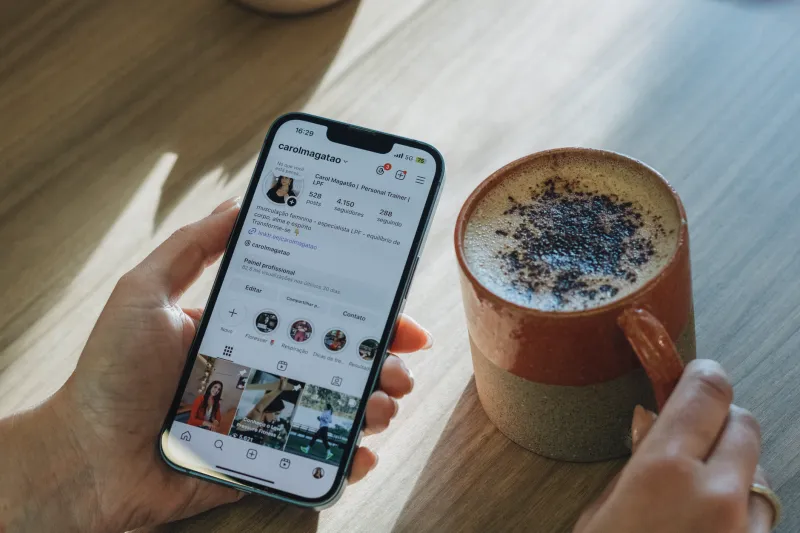
Somebody's favorite creator posted a Spotify wrapped. Standard stuff. But tucked into the corner of the screenshot was a half-finished drink — something iced, something green, something in a cup with a specific logo. Within hours, the comments had spiraled into a full-blown character study. Of course they drink matcha. That explains everything.
It doesn't explain anything, obviously. But that's kind of the point.
Crumbs as Currency
There's a particular kind of fan behavior that doesn't get talked about as much as it should — not the aggressive kind, not the obsessive kind, but the interpretive kind. The fan who treats every incidental detail like a clue in a puzzle they're slowly solving. The background of a photo. The book spine on a shelf. The split-second glimpse of a grocery bag. These things aren't hidden, exactly, but they weren't meant to be headlines either. They're ambient. Accidental.
And yet they become the basis for elaborate, confident narratives about who a person really is.
This isn't new behavior, but the internet has turbocharged it. Parasocial relationships — the one-sided emotional bonds we form with people we've never met — have always run on incomplete information. That's basically the whole deal. You get a curated slice of someone's life, and your brain fills in the rest. What's changed is how much we now share that gap-filling process with each other, in real time, in public comment sections and Discord servers and TikTok stitch chains.
The crumbs aren't just consumed privately anymore. They're traded.
The Psychology of Meaning-Making
Here's what's actually happening, stripped down: humans are pattern-recognition machines. We are deeply, almost compulsively wired to find meaning in randomness. It's a feature, not a bug — it helped our ancestors survive. But in the context of following a stranger online, it means we are constantly constructing narratives from data points that were never designed to carry that weight.
A creator orders oat milk. A subset of their audience immediately triangulates: environmentally conscious, probably votes a certain way, lives in a specific kind of city, has specific politics, is processing something emotionally. None of that is necessarily true. Some of it might accidentally be. But the leap from "oat milk" to "here's who this person is at their core" is a leap that the audience is making entirely on their own, and then reinforcing collectively.
There's a term psychologists use — apophenia — for the experience of perceiving meaningful connections between unrelated things. It's the same mechanism that makes us see faces in clouds. Fans applying it to a creator's coffee order aren't doing something pathological. They're doing something deeply human. The problem is when the constructed narrative becomes more real to them than the actual person.
The Community Dimension
What makes this phenomenon particularly interesting in 2024 is that it's not just a solo mental exercise. The meaning-making is collaborative. Fan communities build these theories together, workshopping interpretations, assigning significance, voting up the readings that feel most satisfying. There's a social reward structure baked in — the person who spots the detail first, who makes the sharpest connection, who ties the most threads together, earns status.
So now you've got a feedback loop. Individual curiosity feeds communal theorizing, which reinforces individual investment, which makes every new detail feel more significant. The matcha latte becomes a data point in a running dossier. The next detail will be read through the lens of everything that came before it.
This is how you end up with fans who feel like they know a creator better than that creator knows themselves. They've done the analysis. They've cross-referenced the evidence. They've built the case.
What Creators Are (and Aren't) Responsible For
It's worth being honest about the complicated position this puts creators in. Some of them are absolutely aware of what they're doing — dropping details strategically, letting ambiguity do its work, understanding that mystery is engagement. Others are genuinely just living their lives and posting things without anticipating that their smoothie choice is going to become a Reddit thread.
But neither case fully explains or excuses the interpretive leap fans make. A creator choosing to be a little mysterious isn't consenting to have every ambient detail of their life turned into evidence. And a creator who posts casually definitely isn't. The gap between "sharing something" and "inviting psychological analysis" is significant, even if the internet has blurred it almost beyond recognition.
What's interesting is that creators rarely push back on this directly. Some find it flattering. Some find it unsettling. Most seem to have just accepted it as the ambient condition of having an audience — the knowledge that they are being read, constantly, in ways they didn't intend and can't control.
The Hunger Underneath It All
Strip away the mechanics, and what you're really looking at is loneliness wearing a detective costume.
People build elaborate narratives from a creator's drink order because they want to feel close to someone. They want to feel like they understand something true and specific about another human being. That's not a weird desire — it's one of the most fundamental human desires there is. The issue is that the internet has created a weird situation where that desire gets directed at people who are, at best, a partial projection of themselves and, at worst, a carefully constructed persona designed to maximize engagement.
The closeness that feels earned through all that interpretive work isn't real closeness. It's a very convincing simulation. And the gap between the two — between the person you've theorized into existence and the person who actually ordered the matcha — is where most parasocial disappointment lives.
There's something almost poignant about it, honestly. All that effort. All those threads. All that careful reading of background details and beverage choices and location tags. And at the end of it, you still don't know them.
You just know the story you built around them.
Signal Check
None of this is unique to any one platform or any one fan community. It's happening everywhere, at scale, all the time. And it's not going to stop — not because people are broken, but because the underlying need is legitimate and the current infrastructure of creator-audience relationships doesn't really offer a better way to meet it.
What would actually help is probably some combination of honesty about the limits of what we can know about strangers online, and a little more friction in the communal meaning-making process. Not less curiosity — curiosity is fine. Just a little more awareness of the gap between the crumb and the whole loaf.
Because the latte isn't a personality. It's a latte.