Everything You Ever Posted Is Evidence: The Fans Who Treat Creator Timelines Like Crime Scenes

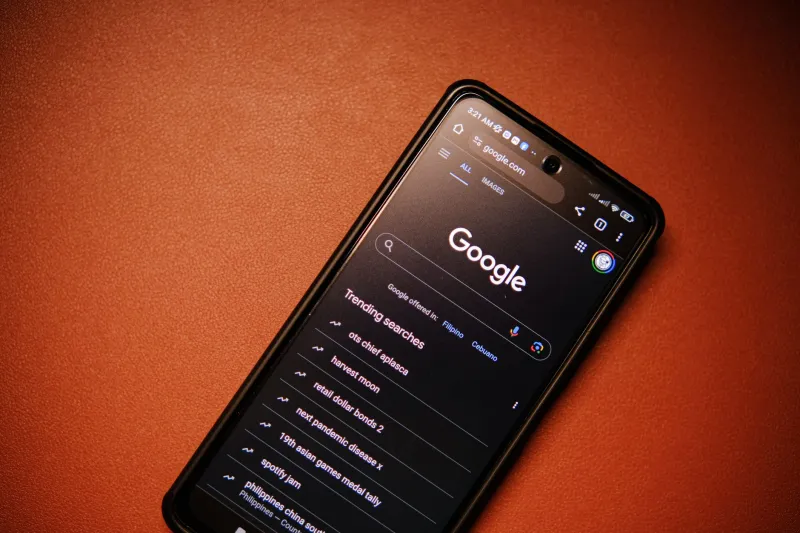
Photo by Photo by Abu Saeid on Unsplash on Unsplash
Somewhere between admiration and obsession, a new behavior quietly took root. It doesn't look like fan art or concert merch. It looks like a Google Doc with 47 tabs open, a Wayback Machine URL highlighted in yellow, and a Discord thread titled something like "receipts — do not delete."
Welcome to the parasocial audit. Fans aren't just watching creators anymore. They're archiving them.
The Research Started Before You Even Noticed
It's easy to frame this as a recent thing — a product of stan culture going feral, or algorithms rewarding drama. But the behavior has been building for years, quietly, in the background of every major creator controversy you can name. The tools just got better.
The Wayback Machine has been around since 1996. Deleted tweet databases like Politwoops and various third-party archivers have existed for over a decade. Old YouTube interviews, Reddit AMAs, podcast appearances from 2017 — none of it ever really disappears. What changed isn't the availability of the information. What changed is that fans started treating it like source material.
A creator posts something in 2024 that contradicts something they said in 2019. Within hours, someone has already found the original clip, timestamped it, and posted a side-by-side. The audience doesn't need a journalist to do this work anymore. They are the journalists, except they're also emotionally invested in the subject, which makes the whole thing significantly more complicated.
What's Actually Driving This
The psychological engine behind creator auditing is worth taking seriously, because it's not purely malicious — even when it looks that way from the outside.
Parasocial relationships, by definition, are one-sided. Fans invest real emotional energy into people who don't know they exist. That asymmetry creates a specific kind of anxiety: What if the person I've been rooting for isn't who I think they are? The audit is, in a weird way, an attempt to resolve that anxiety through evidence. If you can verify someone's consistency across five years of public statements, you've essentially done your own due diligence on a relationship the other party doesn't even know is happening.
There's also something deeper going on around trust. American audiences have watched enough public figures collapse under the weight of their own contradictions — politicians, pastors, celebrities — that a certain baseline skepticism has become culturally baked in. Creators exist in that same atmosphere. Being a fan doesn't mean you stop watching for red flags. Sometimes it means you watch harder.
And honestly? Some of this is just the internet being the internet. The dopamine hit of finding a contradiction, the community that forms around shared discovery, the content that gets made from the fallout — these are their own rewards, separate from whatever anyone actually feels about the creator in question.
The Toolkit Is More Sophisticated Than You Think
Casual observers tend to imagine fan investigators as people with too much time and a screenshot habit. The reality is more organized.
Dedicated fanbases maintain shared archives — Google Sheets logging interview dates, quotes, and sources. Some communities use browser extensions to flag when a creator edits or deletes posts. Others run informal cross-referencing operations where members divide up a creator's back catalog like researchers divvying up primary sources.
The Wayback Machine is the obvious entry point, but it's far from the only one. Old subreddit threads, archived Tumblr posts, early YouTube comments, even metadata on photos — all of it gets pulled into the record. Some fans have become genuinely skilled at digital forensics without ever intending to. They started as supporters and ended up as archivists.
What's striking is how much infrastructure exists for this, almost entirely built by unpaid volunteers who consider it part of being a fan.
How Creators Are Adapting (Or Not)
The smart ones figured this out early: the archive never sleeps, so the only real defense is consistency. Not curated consistency — actual consistency. The difference matters, because audiences who are actively auditing you will eventually find the gap between the two.
Some creators have responded by leaning into transparency, volunteering their contradictions before someone else surfaces them. It's a disarming move. If you acknowledge that you used to think differently about something and explain why you changed, you take the ammunition out of the clip. The narrative becomes growth rather than hypocrisy.
Others have tried the opposite approach — locking down their digital footprints, scrubbing old interviews, going quiet on platforms where their early content lives. This almost never works. It tends to accelerate the investigation rather than shut it down, because deletion reads as guilt to an audience that's already suspicious.
Then there's a third category: creators who simply don't know this is happening. They're building their brand in the present tense while fans are quietly assembling a longitudinal record of everything they've ever said. Those are the ones most likely to get caught off guard when something surfaces.
What This Means for the Creator-Audience Contract
There's a version of this conversation that treats the parasocial audit as purely toxic — fans overstepping, holding creators to impossible standards, weaponizing old content out of context. And that version isn't entirely wrong. Context matters. People change. A quote from six years ago doesn't always mean what it meant then.
But there's another version that's harder to dismiss. Creators ask for trust, attention, and often money. They build audiences by presenting versions of themselves as authentic. If that authenticity is constructed — if the vulnerability is strategic and the consistency is performed — then the audience has a reasonable interest in knowing that. The audit is, in part, a response to a marketplace where parasocial intimacy is monetized and sincerity is the product being sold.
When the product is a person, people want to know if it's real.
Signal Stays Signal
What's emerging here isn't just a fan behavior. It's a new kind of literacy — one that treats a creator's entire public output as a text to be read critically, not consumed passively. Whether that literacy gets used carefully or recklessly depends on who's doing the reading.
The creators who thrive in this environment aren't necessarily the most polished or the most strategic. They're the ones whose archives don't contradict them. The ones who were saying the same things in 2018 that they're saying now, even if nobody was checking yet.
Everything you ever posted is already evidence. The only question is what it proves.