You Think You Know Them: The Invisible Mythology We Build Around Strangers Online

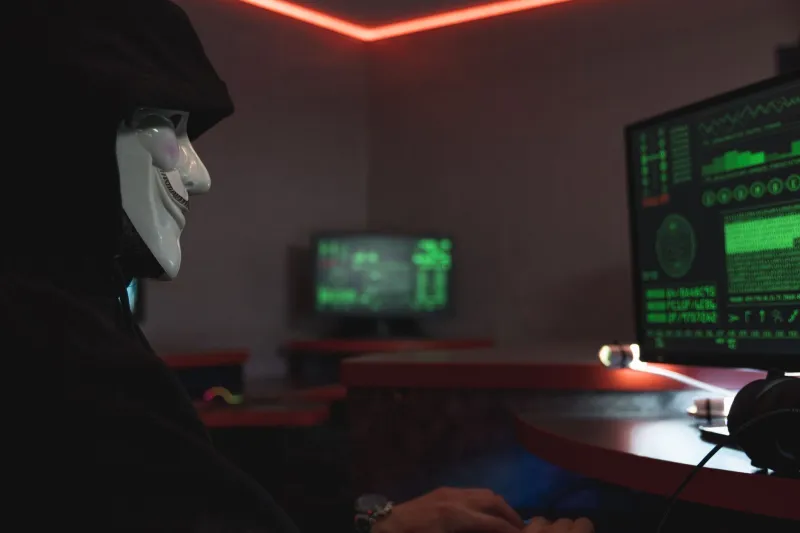
Photo by Photo by Olegs Jonins on Unsplash on Unsplash
There's a specific kind of confidence that comes from watching someone's content for two years straight. You know their coffee order. You know which friend group they're quietly drifting from. You know the look they make right before they say something they've been holding back. You know them.
Except you don't. And the strange part isn't that we're wrong — it's how completely convinced we are that we're right.
This is the parasocial audit nobody wants to sit with: a hard look at what we actually have versus what we think we have when we follow someone online. The math almost never adds up. But the feeling? The feeling is airtight.
The Raw Material of a Person We Never Met
Let's be honest about what a content feed actually gives you. You get curated moments — the ones someone chose to film, chose to post, chose to caption a certain way. You get a highlight reel dressed up as a window. Even the creators who lean into the "messy and real" brand are making editorial decisions about which mess to show you.
Psychologists have a term for what happens next: parasocial interaction. It was coined back in the 1950s by sociologists Donald Horton and Richard Wohl, who noticed that television audiences were developing one-sided emotional bonds with TV personalities. They were describing the Ed Sullivan era. They had no idea they were writing the user manual for TikTok.
The brain doesn't cleanly distinguish between a relationship that's reciprocal and one that isn't. When someone talks to a camera the way a friend talks to you — casually, directly, with eye contact — the social processing regions of your brain light up the same way they would in an actual conversation. You're not being naive. You're being human. The hardware was just never designed for this particular input.
What we do with that input, though, is where things get interesting.
The Profile We Build in the Dark
Most followers don't consciously decide to construct a mental model of a creator. It just accumulates. A comment about their childhood here, a reaction video there, a story about a difficult friendship that felt a little too specific to be throwaway content. We file it all. We cross-reference. We build.
The profile that emerges feels coherent because we made it coherent. We smoothed the contradictions, filled the gaps with our own assumptions, and quietly assigned motivations to behavior we couldn't actually explain. When they seemed sad in a vlog, we had a theory. When they unfollowed someone, we had a theory. When they posted at 2am, we definitely had a theory.
This isn't pathological — it's just pattern recognition doing what it always does, operating on incomplete data and acting like the data is complete. The issue is that the data is radically incomplete in a way we don't account for.
Researchers at the University of Kansas found that parasocial relationships activate many of the same psychological needs as real relationships — belonging, understanding, companionship. The problem isn't that those needs are being met. It's that we're meeting them with a character we partially invented, and we've named that character after a real person.
When the Mythology Breaks
Ask anyone who's watched a creator they loved go through a public controversy. There's a specific kind of disorientation that comes with it — not just disappointment, but something closer to vertigo. The ground moved. The person you'd been building for two years suddenly didn't match the new information, and the whole structure shook.
What's actually happening in those moments is a collision between your constructed version and something closer to reality. And the collision is rough because the constructed version had weight. You'd invested time in it. You'd defended it in comment sections. You'd let it influence your own self-perception — borrowed their taste, their confidence, their way of framing things.
When that constructed version has to be revised or discarded, it doesn't just feel like being wrong about a stranger. It feels like losing someone. Because in a functional sense, you are. The person you built is gone. The person who was always actually there is someone you're only now starting to meet.
Some people update and move on. Others double down — defending the constructed version against the new evidence because dismantling it costs too much. Fan communities can calcify around this refusal, becoming protective structures for a mythology rather than genuine appreciation for a person.
The Asymmetry Nobody Talks About
Here's the part that tends to get glossed over in the broader conversation: the creator usually has no idea who you are.
That sounds obvious. But sit with it for a second. You might have years of context on this person. You've watched them grieve, celebrate, change their mind, grow their hair out, cut it off, move apartments, change their opinions on things they were once loudly certain about. You have a relationship with the arc of their life.
They have, at best, a vague sense of their audience as a collective. You are, to them, a number. Maybe a username in a comment if you've been consistent enough. The intimacy flows in exactly one direction, and the person on the receiving end of all that knowing doesn't even know the flow exists.
This isn't a criticism of creators. It's just the architecture of the thing. The platform was built on this asymmetry — it's what makes the model work. But it also means that the relationship you feel you have exists almost entirely in your own perception, built from material the other person released into the world without knowing specifically what you'd do with it.
What an Honest Audit Looks Like
None of this means you should feel weird about following people you've never met, or that caring about creators is some kind of embarrassing glitch. Human beings have always formed attachments to public figures — actors, musicians, athletes. This isn't new. The scale and the intimacy of the medium are new.
What's worth doing, occasionally, is just getting honest about the inventory. What do you actually know? What did you fill in yourself? Where did you give a stranger the benefit of the doubt in a way you wouldn't extend to someone in your actual life — or, inversely, where did you apply a standard to them that you'd never hold a real friend to?
The gap between the person and the profile you built of them is where a lot of the emotional turbulence of online life actually lives. The parasocial audit isn't about feeling bad about the gap. It's just about seeing it clearly enough to know what you're actually working with.
Because the follow was always a small act of fiction. Knowing that doesn't make the connection less real. It just makes you a more honest reader of your own experience — which, in a media environment built to blur exactly that line, is about the most useful thing you can be.